
Hundreds of trees have been planted at a South Downs beauty spot to increase diversity of the woodland following a coppicing activity.
The project involved native tree planting within Graffham Down Trust’s 13 hectare woodland at Graffham Down, south of Graffham and adjacent to the South Downs Way.
Tree Planting – Species Diversification
South Downs Trust’s Trees for the Downs initiative provided 630 native trees to be planted in the winter of 2024. Alongside the trees, the fund also supplied suitable protection for the young saplings, such as canes and biodegradible guards. Species included elm, dog rose, maple, hazel, dogwood, oak, wild cherry and lime. The trees were planted by a dedicated group of volunteers, including local villagers, a MIND work group and boosted by a group of geocachers who help out at the site 2-3 times a year.
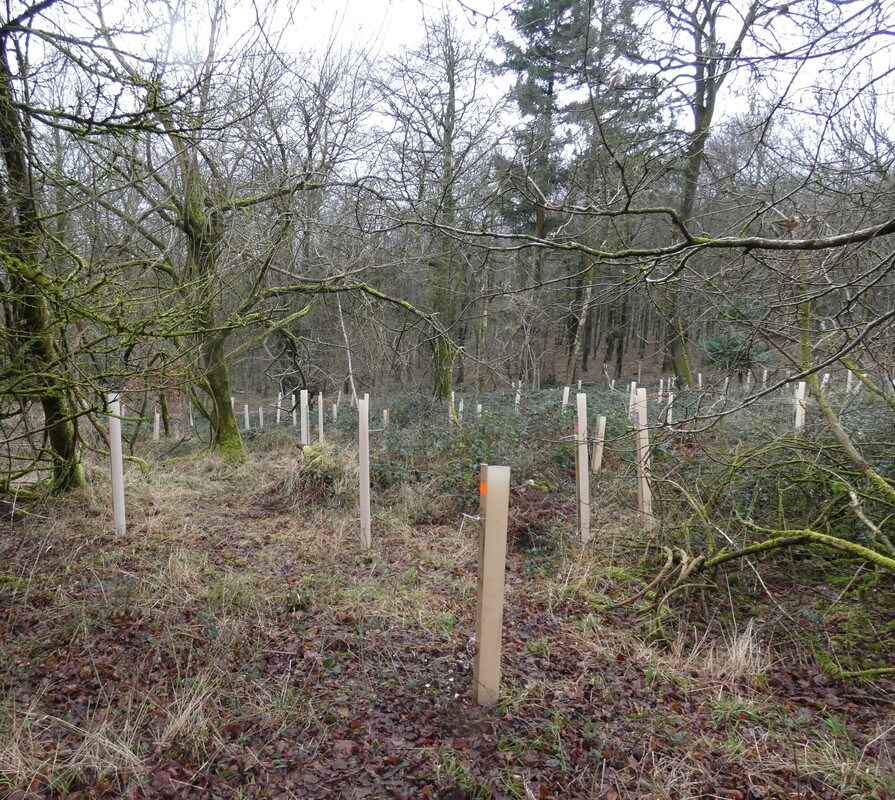
The woodland where the trees were planted had not been coppiced for at least 40 years, resulting in reduced diversity. Ash dieback had also caused the loss of many ash trees. The coppicing let more light into the woodland and the project aimed to increase tree species diversification to enrich the woodland.
Image – new tree planting at Graffham Down – Credit Matthew Sennitt
South Downs National Park ranger Chloe Goddard organised volunteers in fencing work to prevent deer from damaging regrowth. Volunteers also carried out tending duties to the newly planted trees, ensuring that they received water – quite a logistical feat that involved getting large drums of water and watering cans up to the remote planting area.
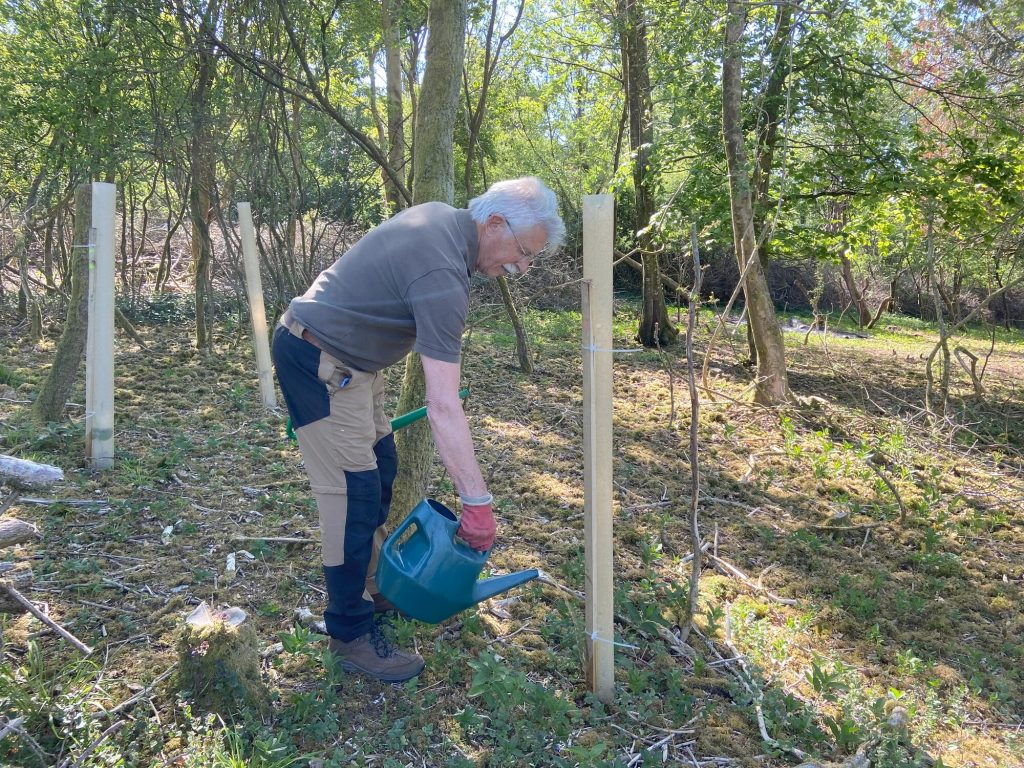
Despite the harsh summer of 2026 with the drought conditions being particularly hard on trees, Graffham Down Trust estimate that following the tending duties approximately 60% of the trees planted in 2024 are still alive. This is considered to be a good outcome, as if all had survived the planting may have been too dense.
Image – Graffham Down Trust volunteer watering a tree – Credit Matthew Sennitt
Impact on woodland and biodiversity
The Trees for the Downs allocation has helped to created a more diverse, multi-layered woodland, with taller growing trees, a middle layer and ground level vegetation including bramble and gorse.
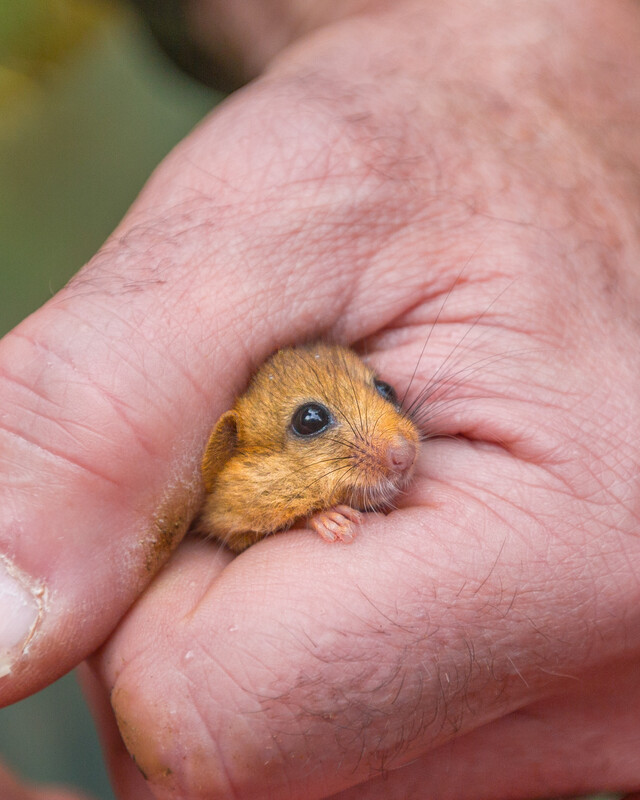
The woodland is home to lots of wildlife including dormice and hawfinches. Interestingly, fewer dormice are now being recorded in nest boxes on the reserve, which Graffham Down Trust attributes to improved habitat giving them more opportunities to nest naturally.
Image – Hazel dormouse found during box surveys (under license) – Credit Andy Reeves
Renowned naturalist, writer and wildlife guide Michael Blencowe regularly leads walks around the Graffham Down Trust area and said:
“Graffham Down is one of the finest nature reserves in Sussex. It is home to some of the county’s rarest species.”
What Trees for the Downs made possible
Receiving 630 trees at once enabled Graffham Down Trust to undertake the enrichment planting as one large project. Without Trees for the Downs support the work would have taken much longer and would have had to be done in stages.
Jim Kirke, one of the Graffham Down Trust volunteers said:
“Trees for the Downs helped strengthen the biodiversity and range of wildlife we have at Graffham Down. Without Trees for the Downs, we would have struggled to do it all in one go. We would have been raising funds for ten trees here and ten trees there, and it would have taken much longer. Having the trees, guards and posts meant that we just needed to provide the manpower.”
More details about Graffham Down Trust
Grafham Down Trust runs a Butterfly Walk in spring, a Picnic Day in the summer for members of the public – and welcomes new volunteers for its monthly work parties.
The volunteers are a friendly group and tea and cake are provided. Details of upcoming work parties are found here.
For more information about our Trees for the Downs fund please visit – South Downs Trust