
There’s nothing quite like the magic of spotting the glimmering green lamp of a glow-worm on a summer’s evening.
The incredible insect has now been introduced to a site in the South Downs National Park as part of ongoing efforts to help local populations recover.
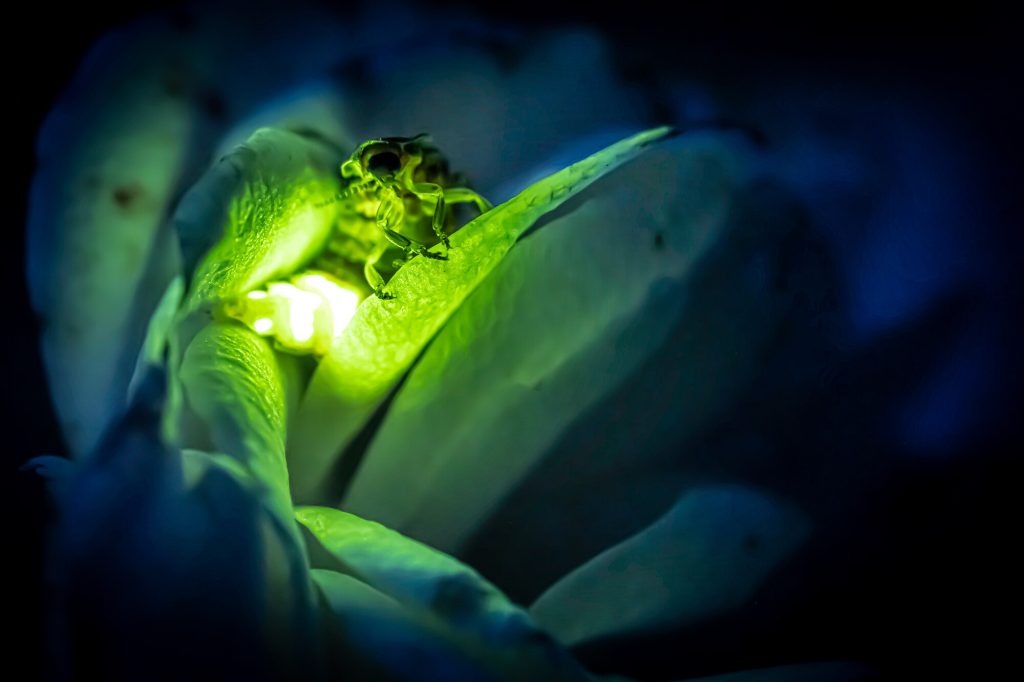
The common glow-worm – which is in fact a beetle – is struggling across the UK due to the impact of habitat loss and light pollution, while across Europe five species of glow-worm are threatened with extinction.
The South Downs, which has a handful of sites where glow-worms live, offers good conditions for the species to thrive as it has some of the darkest skies in England. The National Park Authority recently made increasing dark skies coverage a priority in its five-year Partnership Management Plan.
Image: Female firefly common glowworm Lampyris noctiluca sitting on a rose blossom glowing in the dark.(Wirestock)
Working with rangers from the National Park, a team of community volunteers released glow-worm larvae to a site near Alton, in Hampshire. The glow-worm larvae came from a site in Devon and were introduced with the help of specialist consultants.
The larvae will continue to grow until the summer of 2027 when they will be fully-fledged adults. The males look like typical beetles, but the females have no wings and look similar to the larvae. During the summer months females put on a spectacular night-time display as they emit light to attract a male, which have large, photosensitive eyes.
Artificial lights, particularly white LED streetlights, can mask this glow, stopping males finding females, which disrupts their ability to breed.
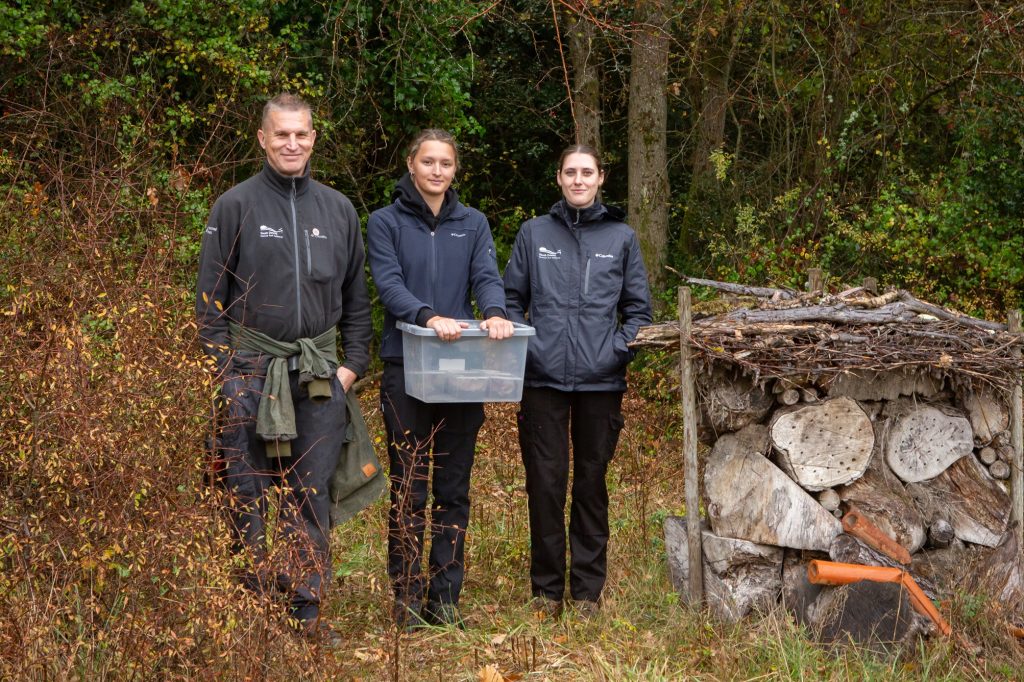
The glow-worm introduction has been funded by the South Downs National Park Authority, along with the local parish council.
Image shows Ranger Paul Bushell alongside specialist consultant Izzy Radford and Assistant Ranger Niamh Lewis-Colby. (Credit Sam Moore).
Paul Bushell, a National Park Ranger for the Western Downs, said:
“Glow-worms are struggling across the UK due to artificial lighting, along with habitat loss and connectivity, contributing to the decline of this magical species.
“The local community have worked hard to create a perfect habitat for glow-worms and it’s been wonderful working with them on this re-introduction.
“Glow-worms would once have been more widespread across the south of England, but artificial lighting introduced over the past 100 years has disrupted breeding patterns.
“Being a dark night sky and on the edge of a large woodland with little light pollution makes this the perfect area for a reintroduction. We’ll have a wait a while for the glowing to begin, but we’re hoping it will be worth the wait!”
And Paul added: “Glow-worms are part of the natural food cycle and help balance the local ecosystem.
“They are also a symbol of hope and renewal and the bioluminescent glow has been used in folklore and art for hundreds of years. It’s the kind of species that can capture people’s imaginations and hopefully help develop a deeper appreciation for nature.”
Nature conservationist Derek Gow, from Keep It Wild, said: “We are very proud to have provided the glow worms for this restoration project in the South Downs National Park in a time of nature crisis when the wildlife of this planet is finishing fast. Projects like this are essential for nature’s restoration.”
National Park rangers will be working with local volunteers to manage the habitat and carry out surveys over the next year to measure the success of the re-introduction. By next summer, it’s hoped that the glowing displays will begin.
The National Park Authority’s Partnership Management Plan, launched earlier this year, has set a goal of expanding the current dark sky core (the very darkest areas) of the International Dark Sky Reserve by 10 per cent by 2031 by working with lighting authorities and local communities. The South Downs International Dark Sky Reserve is celebrating its 10th anniversary this year. See the interactive digital Partnership Management Plan here.
- Across Europe, five species of glow-worm are threatened with extinction, another two are endangered, and the common glow-worm is classified as near threatened, according to the International Union for Conservation of Nature.
- Glow worms have long been a fixture in folklore across the world, traditionally associated with fairies, magic, and, in some contexts, spirits of the dead. Their glow has been interpreted as magical lights or natural lanterns.
- The larvae of glow-worms are predators, feeding on slugs and snails. They kill their prey by delivering a series of toxic bites, injecting digestive proteins that paralyse and eventually dissolve the soft body of the slug or snail.